
Should you invest in organic search rankings or pay for ad placements at the top of Google? It's one of the most common questions in digital marketing, and the honest answer is: it depends. Both SEO and PPC are powerful strategies for driving traffic from search engines, but they work in fundamentally different ways, on different timelines, and with different cost structures.
The short version? Most successful businesses use both. SEO builds sustainable visibility that compounds over time. PPC delivers immediate traffic you can turn on and off like a faucet. The right mix depends on your goals, budget, timeline, and competitive landscape.
This guide breaks down how each strategy works, when to prioritize one over the other, and how to use them together for the best results.
Key Takeaways
- Neither SEO nor PPC is universally "better." The right choice depends on your business goals, timeline, and budget. Most businesses benefit from a combination of both.
- SEO compounds over time, PPC stops when you stop paying. Organic rankings can drive traffic for months or years after the initial investment. PPC traffic disappears the moment your budget runs out.
- Organic results earn more trust from users. Studies consistently show that users are far more likely to click on organic listings than paid ads, particularly for informational queries, which can lead to higher engagement and stronger brand perception.
- PPC costs are rising. Competition for paid search placements continues to intensify, with paid click share doubling across major product verticals in the past year, making efficient PPC management more critical than ever.
- The smartest strategy uses both channels together. PPC data can inform your SEO keyword priorities, while strong organic rankings reduce your dependency on paid spend.
SEO vs PPC at a Glance
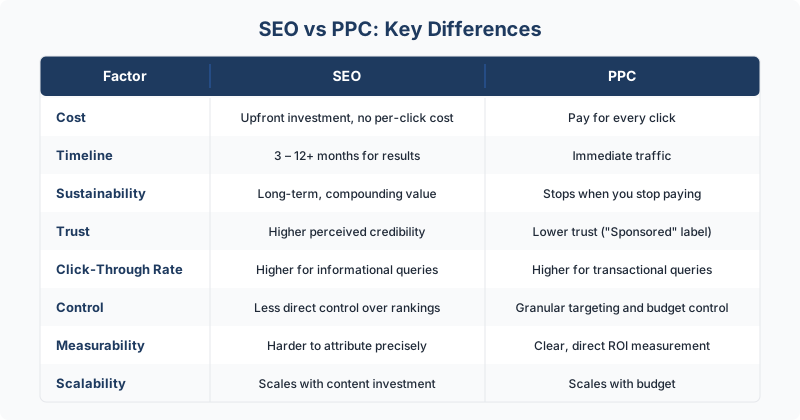
Before diving into the details, here's how the two channels compare across the factors that matter most.
| Factor | SEO | PPC |
|---|---|---|
| Cost | Time + resources upfront, no per-click cost | Direct ad spend, you pay for every click |
| Timeline | 3 to 12+ months for meaningful results | Traffic starts immediately |
| Sustainability | Long-term, compounding value | Stops when you stop paying |
| Trust | Higher perceived trust from users | Lower trust due to "Sponsored" label |
| Click-through rate | Generally higher for informational queries | Often higher for high-intent transactional queries |
| Control | Less direct control over rankings | Granular control over targeting and budget |
| Measurability | Harder to attribute precisely | Clear, direct ROI measurement |
| Scalability | Scales with content investment | Scales with budget |
Both strategies target the same real estate: the search engine results page (SERP). SEO earns placement in organic results, while PPC buys placement in the sponsored sections, whether on Google Ads or Microsoft Advertising (Bing). Understanding the strengths and tradeoffs of each is essential for building an effective SEO strategy.
How SEO Works
SEO is the process of optimizing your website so it ranks higher in organic search results. This involves creating high-quality content, building authoritative backlinks, improving technical site health, and aligning your pages with search intent.
The biggest advantage of SEO is sustainability. Once a page ranks well, it can drive traffic for months or years with relatively minimal maintenance. According to Google Search Central, the goal of SEO is to help search engines understand your content and present it to users searching for relevant information.
SEO ROI also tends to compound over time. In practice, well-executed SEO campaigns deliver strong long-term returns because the marginal cost of organic traffic decreases as your rankings stabilize. Unlike PPC, where every click costs money, organic traffic continues flowing without additional per-click spend. An Ahrefs study of 2.3 million keywords found that nearly 38% of businesses running Google Ads already rank in the top 10 organically for those same terms, highlighting how much paid traffic overlaps with organic visibility that SEO could capture at no per-click cost.
The tradeoff? SEO takes time. Depending on your competition, domain authority, and content investment, meaningful results usually take three to six months to materialize, and significant impact can take a year or more. It requires patience, consistent effort, and a willingness to invest before you see returns.
How PPC Works
PPC (pay-per-click) advertising lets you bid on keywords to display ads at the top of search results. The most common platforms are Google Ads and Microsoft Advertising, where you pay each time someone clicks your ad.
The biggest advantage of PPC is speed. You can launch a campaign and start driving traffic the same day. PPC also gives you precise control over targeting, including location, demographics, device type, time of day, and remarketing audiences. Your ad's position depends on a combination of your bid amount and your Quality Score, a metric Google uses to assess the relevance of your ad, keywords, and landing page.
However, PPC costs have been climbing steadily. Data from Search Engine Land shows that across multiple product verticals, paid search click share doubled between January 2025 and January 2026, while classic organic click share declined by 11 to 23 percentage points. This increasing competition for ad space is driving costs higher across most industries. CPCs vary widely by industry: highly competitive verticals like legal services and insurance can see per-click costs several times higher than less competitive sectors like entertainment or travel.
The fundamental tradeoff with PPC is straightforward: when you stop paying, your traffic stops. There's no residual value. Every visitor costs money, and those costs tend to increase over time as more advertisers compete for the same keywords.
When SEO Makes More Sense
SEO should be a priority when:
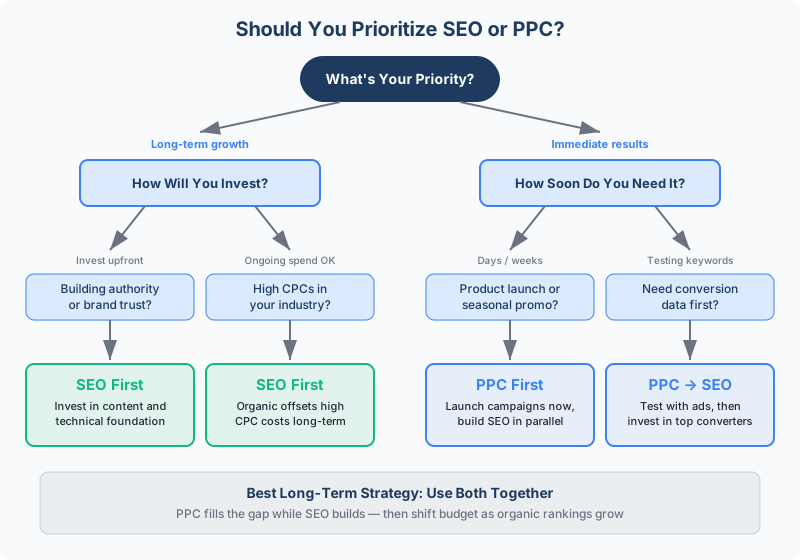
You're focused on long-term growth. If your primary goal is building a sustainable source of traffic that doesn't require ongoing ad spend, SEO is the foundation. Every piece of content you create and optimize is an asset that can drive visitors for years.
Your budget favors investment over expense. SEO costs are weighted toward the front end, with content creation, technical optimization, and keyword research requiring significant upfront effort. But over time, the marginal cost of each visitor approaches zero.
You're building brand authority. High organic rankings signal credibility and strengthen your E-E-A-T signals. When your site consistently appears for relevant searches, users begin to recognize and trust your brand, something paid ads struggle to replicate.
You're targeting informational queries. For searches where users want to learn, understand, or research, organic results typically receive the majority of clicks. Users are more likely to scroll past ads when their intent is educational rather than transactional.
You operate in an industry with high CPCs. If paid clicks in your space cost $5, $10, or more, the long-term economics of SEO become even more compelling. Ranking organically for those same keywords means capturing that traffic without paying per click.
When PPC Makes More Sense
PPC should be a priority when:
You need results immediately. Launching a new product, running a seasonal promotion, or entering a new market? PPC can put you in front of searchers today, not months from now.
You're testing keywords and messaging. Before investing heavily in SEO content, PPC lets you test which keywords actually drive conversions. You can use your free SERP simulator to preview how your listings might appear, then validate with paid campaigns.
You're targeting highly competitive terms. For keywords where the top organic positions are locked in by high-authority competitors, PPC gives you an alternative path to visibility while your SEO efforts build momentum.
You need precise audience targeting. PPC platforms let you target by geography, demographics, device, time of day, and user behavior. This precision is valuable for local businesses, niche products, or campaigns with specific audience requirements.
You're in a time-sensitive situation. Promotions, events, seasonal offers, and product launches all benefit from the instant-on nature of paid search.
Using SEO and PPC Together
The real power comes from integrating both channels rather than treating them as competitors. Here's what this looks like in practice.
Use PPC to fill the gap while SEO builds. One of the most effective strategies is running PPC campaigns for your target keywords while your organic rankings develop. As your SEO performance improves, you can gradually shift budget away from paid ads for those terms.
Let PPC data inform SEO priorities. PPC campaigns generate immediate conversion data. If a keyword converts well in paid search, that's a strong signal to prioritize it in your organic content strategy. Use tools like a keyword research tool to find related organic opportunities based on your best-performing paid keywords.
Use SEO insights to improve PPC performance. Pages that rank well organically often have strong Quality Scores in Google Ads, which can lower your cost per click. Your highest-performing organic content can also inform better ad copy and landing page design. A meta description generator can help you craft compelling listings that improve CTR for both organic and paid results.
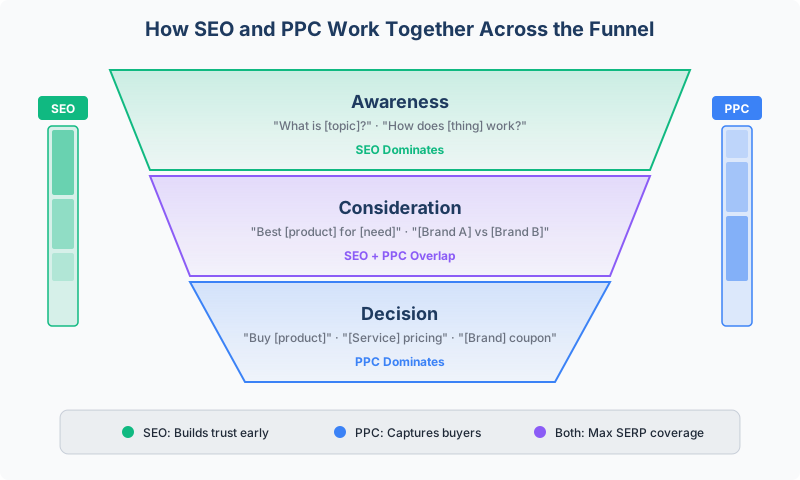
Dominate the SERP. When your brand appears in both organic results and paid ads for the same search query, you capture more real estate on the page and increase your total click share. This is especially valuable for high-intent commercial keywords.
Cover the full funnel. SEO excels at capturing top-of-funnel informational searches, building awareness and trust over time. PPC works well for bottom-of-funnel transactional queries where users are ready to act. Together, they cover the entire customer journey.
Budget Considerations
How you allocate budget between SEO and PPC depends on your business stage and goals.
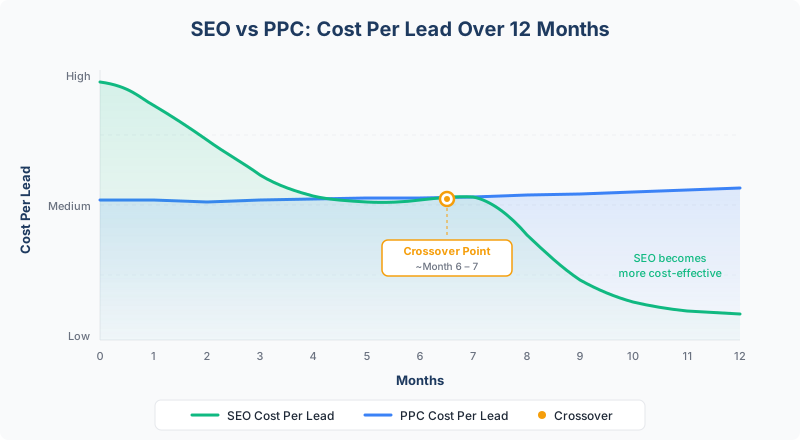
SEO investment is front-loaded with compounding returns. You'll spend more in the first 6 to 12 months on content creation, technical fixes, and link building. After that, the ongoing cost to maintain and grow your organic presence is typically lower than what you'd spend on equivalent PPC traffic.
PPC has a linear cost structure. More traffic means more spend. Double your budget and you roughly double your clicks (assuming you're not hitting ceiling effects). This makes PPC highly predictable but also means costs don't decrease over time.
A practical starting framework for businesses working with limited budgets: invest in foundational SEO first (technical health, core content, keyword research), then layer in PPC for your most valuable commercial keywords. As organic rankings improve, reallocate PPC budget toward new keyword opportunities or different channels.
In practice, many businesses find that a heavier weighting toward SEO-related activities (content, technical optimization, link building) with a smaller allocation toward paid search works well as a long-term strategy, though the exact split varies significantly by industry and growth stage.
The AI Search Factor
It's worth noting that the SEO vs PPC landscape is changing as AI-powered search features like Google's AI Overviews reshape the SERP. A Seer Interactive study covered by Search Engine Land found that organic CTR on queries with AI Overviews fell 61% between mid-2024 and late 2025, while paid CTR on those same queries dropped 68%. Even on queries without AI Overviews, organic CTRs declined, suggesting broader shifts in how users interact with search results.
This makes the combined approach even more important. Diversifying across SEO, PPC, and emerging AI visibility strategies ensures you're not overly dependent on any single source of search traffic. Strong, authoritative content that performs well in organic search is also more likely to be cited in AI-generated answers, creating a compounding benefit. You can track how AI summaries affect your visibility with an AI overview tracker.
Frequently Asked Questions
Is SEO or PPC better for small businesses?
It depends on how urgently you need results. Most small businesses benefit from starting with foundational SEO (optimizing their website, creating useful content, and claiming local listings) because the long-term cost per lead is typically lower. Adding PPC for a few high-value keywords can supplement traffic while organic rankings build.
Can I do SEO and PPC at the same time?
Yes, and most marketing experts recommend it. Running both channels simultaneously lets you capture more search traffic, test keyword strategies faster, and cover different stages of the buyer journey. The two channels generate complementary data that improves the performance of each.
How long before SEO becomes more cost-effective than PPC?
For most businesses, SEO begins to outperform PPC on a cost-per-lead basis within 6 to 18 months, depending on competition and investment level. The crossover point arrives when organic traffic volume becomes significant enough that the cost per visitor drops below what you'd pay in PPC.
Does PPC help SEO rankings?
Not directly. Google has confirmed that running ads does not influence organic rankings. However, PPC can indirectly support SEO by driving traffic to your site, increasing brand awareness, and generating data that informs your organic keyword strategy.
What happens to my traffic if I stop PPC?
It stops immediately. Unlike SEO, where rankings can persist for months after you pause active optimization, PPC traffic drops to zero the moment you turn off your campaigns. This is why building organic visibility alongside paid campaigns is essential for long-term resilience.